

Quick Takeaways
- A3's Q2 2026 data, reported by Power & Motion on August 21, showed North American robot orders reaching 8,940 units, up 4.3% from Q2 2025.
- Non-automotive customers accounted for 56% of robot units ordered during the quarter, showing demand beyond traditional vehicle production lines.
- First-half 2026 orders reached 17,995 units with reported order value of $1.166 billion, up 2.0% in units and 6.6% in value from the first half of 2025.
- Cobots remained a meaningful portion of demand, with 1,137 units ordered in Q2 and 2,774 units across the first half of 2026.
Industry Update
Power & Motion reported on August 21 that the Association for Advancing Automation's latest North American robot order data showed continued growth in the second quarter of 2026. Orders reached 8,940 units, a 4.3% year-over-year increase, and remained close to the 9,055 units recorded in the first quarter.
The report said non-automotive customers represented 56% of robot units ordered during Q2. A3 also reported double-digit year-over-year order gains in several customer groups, including semiconductors and electronics or photonics, automotive components, food and consumer goods, and metals.
For the first half of 2026, A3 reported 17,995 robot units ordered, with order value of $1.166 billion. Collaborative robots also remained visible in the data, representing 1,137 units in Q2 and 15.4% of all robot units ordered in the first six months of the year.
Buyer Considerations
For buyers of servo motors, precision gearboxes, geared motors, brakes, encoders, cabling and automation drives, broader robot adoption can change the timing of component sourcing. When robotics demand spreads into food, electronics, metals, life sciences and other sectors, purchasing teams may need to compare suppliers by repeatability requirements, washdown or cleanroom needs, payload margin, duty cycle and control-network compatibility.
The data does not identify a single component shortage or guarantee demand for any specific motor type. It does suggest that motion components used in robot joints, end-of-arm tooling, conveyors, inspection stations and auxiliary axes remain tied to a wider set of automation projects than automotive assembly alone.
OEMs and integrators planning new robot cells should confirm motor-drive pairing, gearbox ratio, encoder interface, safety functions, spare-part availability and support for future redeployment before locking a bill of materials. Cobot-heavy applications may also require closer review of torque limits, cable routing, mounting stiffness and application-specific end-effector loads.
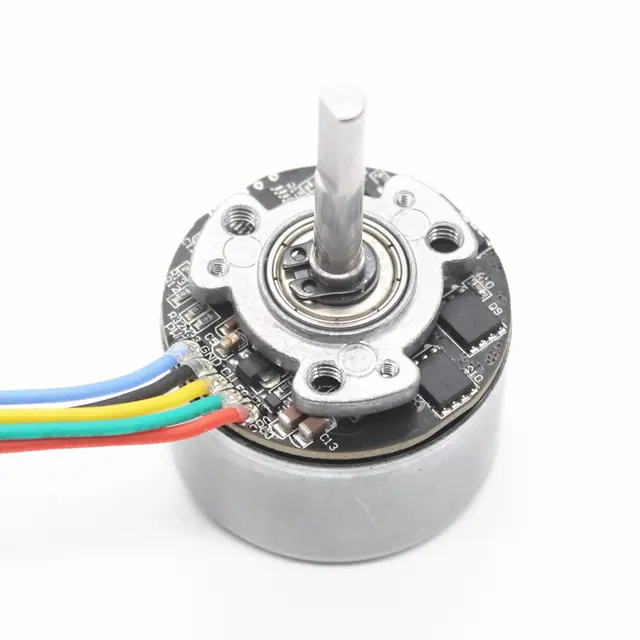
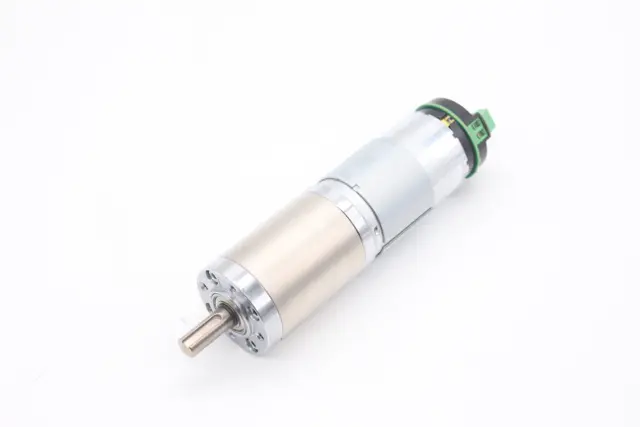
Motor series to compare for this kind of project.
Frequently Asked Questions
Does this robot order data directly specify motor demand?
No. The report covers robot orders, not motor shipments. It is still a useful demand signal because robots and related cells depend on servo motors, gear reducers, drives, encoders and auxiliary motion hardware.
Which buyer groups should pay attention to this update?
Automation integrators, OEMs, production engineers and sourcing teams serving food, electronics, metals, life sciences and automotive component lines should review how broader robot adoption may affect motion-component selection and purchasing schedules.
What should buyers verify before selecting components for robot cells?
Buyers should verify payload and speed margins, gearbox ratio, encoder feedback, brake requirements, drive compatibility, safety integration, environmental rating, cable management and supplier support for spares or future cell changes.
Does higher cobot ordering change motor selection?
It can. Cobot applications often emphasize compact packaging, controlled force, easy integration and flexible redeployment, so motor and drive choices should be checked against the exact robot payload, tooling mass and operating profile.
Source
This article summarizes publicly available source information. Confirm technical details, pricing and compliance requirements with the original source before making purchasing decisions.
Source date: 2026-08-23