

Quick Takeaways
- ABB Robotics introduced the compact IRB 1700 and IRB 1700ID industrial robots for precision manufacturing applications.
- The company says the new models deliver up to 20% shorter cycle times than comparable robots on the market.
- ABB lists payload options from 6 kg to 12 kg across five variants, with OmniCore controllers powering the platform.
- The IRB 1700ID uses internal cable and hose routing to simplify packaging in production cells.
Industry Update
ABB Robotics announced the IRB 1700 and IRB 1700ID as compact industrial robots for precision manufacturing, including electronics, automotive and general industrial applications. The company says the new robot family is designed for high-speed tasks where motion accuracy, uptime and operating cost are all important.
According to ABB, the robots offer payloads from 6 kg to 12 kg across five variants and use OmniCore controllers. The company cites up to 20% shorter cycle times, up to 15% lower power consumption compared with the predecessor IRB 1600 running the same payload on OmniCore, and service intervals of up to 20,000 hours between oil changes.
ABB also lists path repeatability down to 0.03 mm and joint speeds up to 700 degrees per second. Target applications named in the announcement include material handling, arc welding, deburring, sanding and machine tending. The IRB 1700ID version routes cables and hoses inside the arm to reduce external dressing complexity.
The robots are scheduled for public debut at China International Industry Fair in Shanghai, October 12-16, 2026, in arc welding and sanding demonstrations on the ABB Robotics stand.
Buyer Considerations
For automation buyers, the announcement is most relevant where compact robot cells must combine fast cycle time with stable path control. Machine builders comparing robot platforms should check payload, reach, repeatability, controller compatibility, cable routing, tooling mass and service access against the full duty cycle of the application.
The internal routing on the IRB 1700ID may matter in cells where external hoses and cables create snag points or require additional space. Buyers should still confirm dress-pack limits, end-effector loads, available fieldbus options and integration support before standardizing a cell design.
For sourcing teams, the lower power-consumption and longer-service-interval claims are useful comparison points, but they should be evaluated against the actual motion profile, payload and operating hours of the intended line. Confirming controller software, programming workflow and local service coverage remains as important as the robot arm specification.
Motor series to compare for this kind of project.
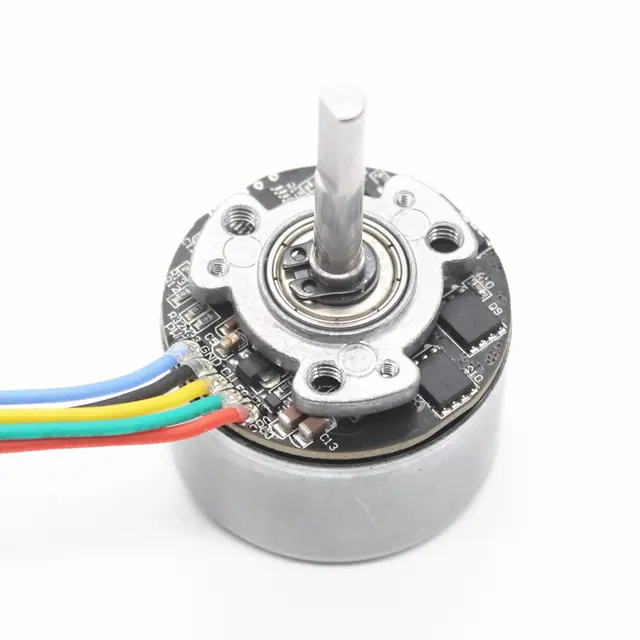 Brushless DC Motors
In internal rotor BLDC motors, the rotor with the permanent magnets rotates on a shaft inside a stationary stator with...
View series
Brushless DC Motors
In internal rotor BLDC motors, the rotor with the permanent magnets rotates on a shaft inside a stationary stator with...
View series
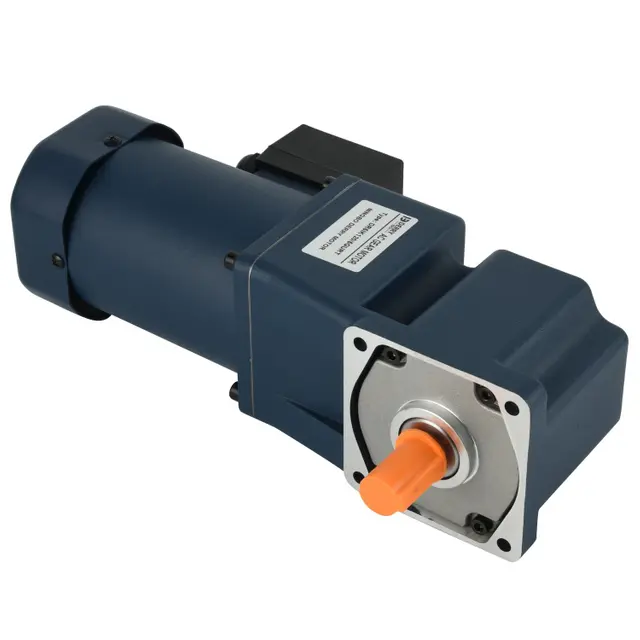 Universal AC Gear Motors
AC motors and gear motors include single-phase motors used with a single-phase AC power supply and three-phase motors...
View series
Universal AC Gear Motors
AC motors and gear motors include single-phase motors used with a single-phase AC power supply and three-phase motors...
View series
Frequently Asked Questions
What changed in ABB Robotics' latest announcement?
ABB introduced the IRB 1700 and IRB 1700ID, a compact robot family for precision manufacturing tasks that require speed, accuracy and efficient cell packaging.
Which applications could be affected?
ABB names material handling, arc welding, deburring, sanding, machine tending and electronics-related assembly as target applications.
What should buyers verify before specifying this robot family?
Buyers should verify payload, reach, repeatability, controller compatibility, tooling mass, cable routing, service intervals and local support against their actual production cycle.
Source
This article summarizes publicly available source information. Confirm technical details, pricing and compliance requirements with the original source before making purchasing decisions.
Source date: 2026-10-14