

Quick Takeaways
- Design World published an August 20, 2026 technical article on using COTS motor platforms with targeted customization in aerospace development.
- The article points to DO-160G environmental testing as a useful reference for understanding component behavior before system-level qualification.
- Motor-level data can help buyers narrow uncertainty around shock, vibration, temperature, humidity, corrosion and electromagnetic conditions.
- Aerospace OEMs still need to confirm the exact tested configuration, customization limits and system-level qualification responsibilities.
Industry Update
Design World published a technical article by Portescap aerospace and defense industry manager Adrien Mettraux on how aerospace OEMs can use commercial-off-the-shelf motor platforms and targeted customization as complementary approaches. The article frames this as a response to shorter program timelines, stricter certification work and pressure to avoid unnecessary clean-sheet component development.
The article highlights DO-160G, the RTCA environmental test framework for airborne equipment, as an important reference point for motors used in aerospace systems. It does not present DO-160G component testing as a replacement for system-level qualification. Instead, it describes documented motor-level testing as a way to start integration from a better-characterized base.
Applications discussed include out-of-cabin actuators, environmental control systems, fluid valves and door actuation mechanisms. The article also describes customization areas that may preserve a platform approach, including shaft shape, mounting and housing features, cabling and termination, and winding changes for speed and torque requirements under defined electrical inputs.
Buyer Considerations
For buyers evaluating precision motors, BLDC motors or actuator motor assemblies, the central question is not whether COTS or custom is universally better. The useful question is which unknowns can be reduced before integration begins, and which performance requirements still justify a custom motor design.
Procurement and engineering teams should ask suppliers which exact motor configuration was tested, which DO-160G sections were covered, and whether the test data still applies after changes to shaft design, mounting, cable termination or winding. A tested base platform can be helpful only if the buyer understands what was tested and what changed.
The article is especially relevant for aerospace-adjacent machinery, robotics, defense equipment and compact motion systems where lead time and qualification risk affect sourcing decisions. Buyers should still verify thermal limits, speed-torque curves, controller compatibility, environmental exposure, documentation availability and long-term supply support before committing to a platform.
Motor series to compare for this kind of project.
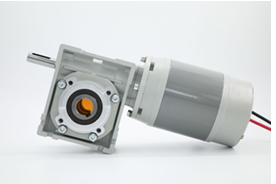 DC Worm Gear Motors
Easty’Worm Gear Motors are designed to generate high torque in a small package size. Worm Gear Motors are great for...
View series
DC Worm Gear Motors
Easty’Worm Gear Motors are designed to generate high torque in a small package size. Worm Gear Motors are great for...
View series
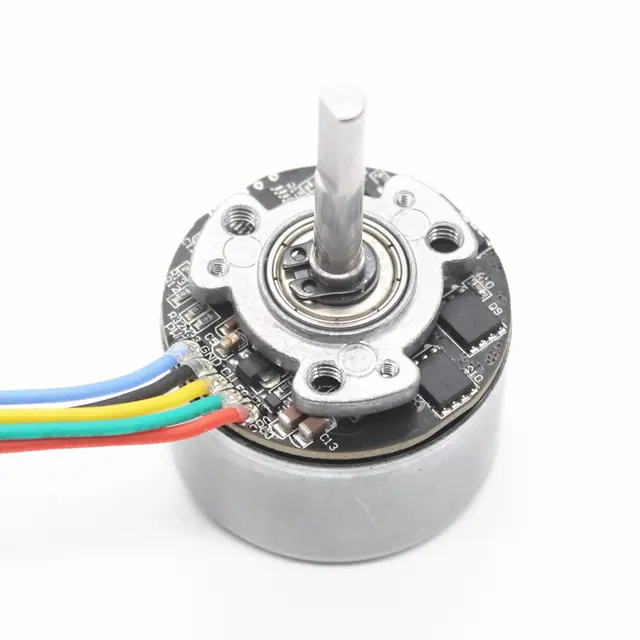 Brushless DC Motors
In internal rotor BLDC motors, the rotor with the permanent magnets rotates on a shaft inside a stationary stator with...
View series
Brushless DC Motors
In internal rotor BLDC motors, the rotor with the permanent magnets rotates on a shaft inside a stationary stator with...
View series
Frequently Asked Questions
Does DO-160G testing mean a motor is automatically qualified for an aircraft system?
No. The Design World article treats DO-160G motor-level testing as useful component evidence, while system-level qualification remains the OEM's responsibility.
Which motor details should buyers verify when choosing a tested COTS platform?
Buyers should verify the tested configuration, environmental test scope, speed-torque data, winding options, shaft and mounting changes, cabling, controller compatibility and supply continuity.
When might a fully custom motor still make sense?
A custom motor may still be appropriate when the application pushes performance, package shape, interface or certification requirements beyond what a tested platform can support.
Why is this update relevant outside aerospace?
The same selection logic can help buyers in robotics, defense equipment, medical systems and compact automation projects weigh proven motor data against the need for application-specific customization.
Source
This article summarizes publicly available source information. Confirm technical details, pricing and compliance requirements with the original source before making purchasing decisions.
Source date: 2026-08-22