
Quick Takeaways
- Control Design's August 18 article says decentralized drives can reduce motor-cable length and wiring complexity when environmental protection is handled correctly.
- The article reports that modern inverters have narrowed the historic performance gap between servo systems and induction motor setups.
- Embedded Ethernet, OPC UA, predictive diagnostics and adaptive programming are now part of the drive-selection discussion for connected automation systems.
- Buyers should compare precision needs, enclosure conditions, power quality, safety functions and maintenance data access before changing a motor-and-drive architecture.
Industry Update
Control Design published a drive-technology update on August 18, 2026, focused on how the line between variable frequency drives and servo motor systems is changing. The article features ABB senior application engineer Kevin Drown and discusses decentralized drives, modern inverter control, communication protocols and energy optimization in industrial motion systems.
The article describes a decentralized drive as placing power and control electronics directly at or near the motor. That placement can reduce motor-cable length and may reduce the need for output filters such as load reactors or dV/dt filters, but it also moves electronics closer to dust, heat, outdoor or remote operating conditions.
For VFD and servo comparisons, the article states that replacing a servo motor with an induction motor is not always straightforward because the applications differ. It also notes that modern inverters have narrowed the historical performance gap, making the evaluation more application-specific than a simple motor swap.
The update also points to embedded Ethernet, OPC UA, remote connectivity, predictive diagnostics, adaptive programming, harmonic reduction and energy optimization as features shaping current drive platforms. These capabilities can turn the drive into a connected automation component rather than only a motor-speed device.
Buyer Considerations
Motor buyers and machine builders should treat this update as a selection checklist, not a reason to replace servos automatically. Servo motors still fit high-precision and high-response axes, while VFD-driven induction motors may be suitable where speed control, cost, robustness and available feedback meet the application's needs.
For decentralized drive projects, buyers should ask where the drive will sit, what enclosure rating is required, how cooling will be handled and whether cable-length reduction offsets the added environmental exposure. Centralized panels may still be preferred when a clean, climate-controlled drive room simplifies service.
For VFD upgrades, the practical comparison should include the current motor, the intended control mode, network requirements, safety functions, harmonic limits, energy-use profile and access to maintenance data. The article's main buyer lesson is that the drive, motor, cabling and site environment must be evaluated as one system.
Motor series to compare for this kind of project.
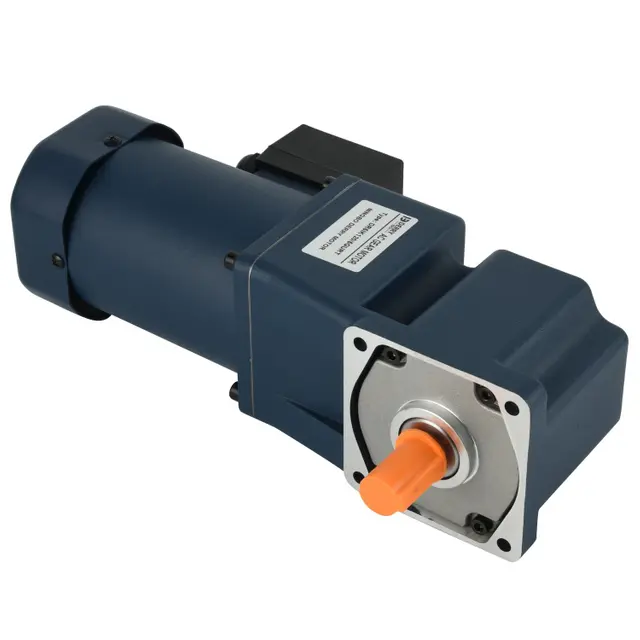 Universal AC Gear Motors
AC motors and gear motors include single-phase motors used with a single-phase AC power supply and three-phase motors...
View series
Universal AC Gear Motors
AC motors and gear motors include single-phase motors used with a single-phase AC power supply and three-phase motors...
View series
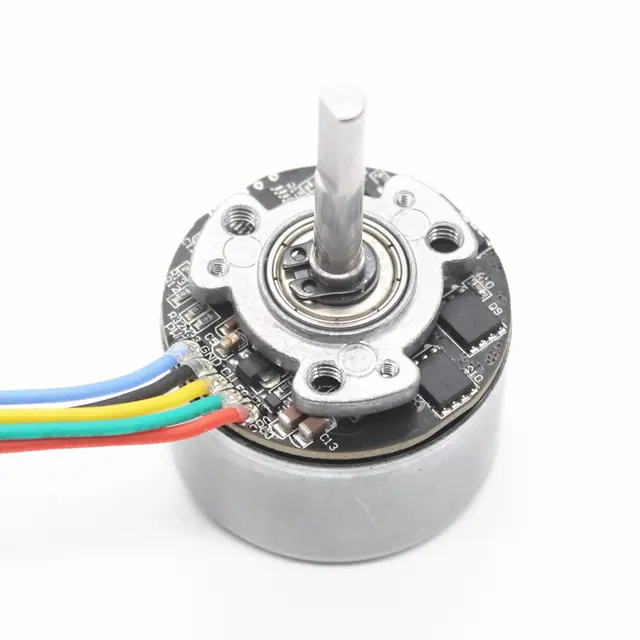 Brushless DC Motors
In internal rotor BLDC motors, the rotor with the permanent magnets rotates on a shaft inside a stationary stator with...
View series
Brushless DC Motors
In internal rotor BLDC motors, the rotor with the permanent magnets rotates on a shaft inside a stationary stator with...
View series
Frequently Asked Questions
Does the Control Design article say VFDs can replace servo motors in every application?
No. It says the choice is application-specific and that replacing a servo motor with an induction motor is not always straightforward because the applications they serve are different.
What is the main benefit of a decentralized drive for machine builders?
The article says moving the drive near the motor can reduce motor-cable length and wiring complexity, but buyers must confirm that the enclosure and cooling are suitable for the local environment.
Which drive features should buyers ask suppliers about?
Buyers should ask about embedded Ethernet, OPC UA support, diagnostics, safety functions, harmonic performance, energy optimization and compatibility with the selected motor type.
Source
This article summarizes publicly available source information. Confirm technical details, pricing and compliance requirements with the original source before making purchasing decisions.
Source date: 2026-08-19