

Quick Takeaways
- Design World published its 2026 Motion Control Handbook on August 10, with coverage aimed at motion-control and power-transmission design decisions.
- The issue separates raw torque and speed applications from positioning systems where reflected inertia, acceleration phases, and drive current requirements need closer review.
- The source also covers absolute encoder resolution, coordinated servo control, robot CNC path execution, and the limits of self-locking worm gearmotors.
- Buyers should treat the handbook as a specification checklist, not as a substitute for confirming motor, drive, gearbox, encoder, and brake details with suppliers.
Industry Update
Design World has published its 2026 Motion Control Handbook, a buyer-facing engineering issue focused on motion-control and power-transmission choices. The handbook distinguishes designs dominated by torque and speed from systems where position, motion profile, reflected inertia, and acceleration behavior shape the final motor and drive selection.
The source highlights several checks that often affect motor purchasing decisions. For servo systems, it points to the need to evaluate both peak and root-mean-square current, while also considering cable length, voltage drop, impedance, and electromagnetic interference near pulse-width modulated drives. For feedback devices, it notes that absolute encoder resolution terms can be easy to misread when single-turn and multiturn values are both expressed in bits.
The issue also includes application examples covering real-time servomotor coordination and robotic CNC path control. These examples are relevant for engineers comparing standard machine axes, parallel-kinematics equipment, and robot-based milling, sanding, or cutting cells.
For gearmotor buyers, the handbook's treatment of self-locking worm gearmotors is especially practical. It cautions that self-locking behavior is not the same as braking, because inertia can continue to move an axis after power is removed. That distinction matters when a design must hold position, stop quickly, or move safely under gravity or external load.
Buyer Considerations
Motor buyers can use the update as a reminder to ask for complete application data before quoting a motor or gearmotor. Load inertia, reflected inertia, acceleration time, duty cycle, mounting orientation, cable run, feedback requirement, and stop behavior can change the right motor frame, gearbox ratio, drive rating, and brake selection.
For servo and BLDC motion systems, the practical check is whether the drive has enough peak capacity for acceleration while staying within continuous current and thermal limits. Encoder wording should also be read carefully, especially when comparing absolute, multiturn, and high-resolution feedback options across suppliers.
For worm gearmotor applications, buyers should avoid treating self-locking as a universal holding method. If a machine must stop an axis predictably or hold a load after power loss, the specification may need a brake, different gearbox, control logic, or mechanical safety measure.
The handbook does not replace supplier engineering review, but it gives purchasing and design teams a useful set of questions before committing to a motor, drive, encoder, robot motion package, or gearmotor assembly.
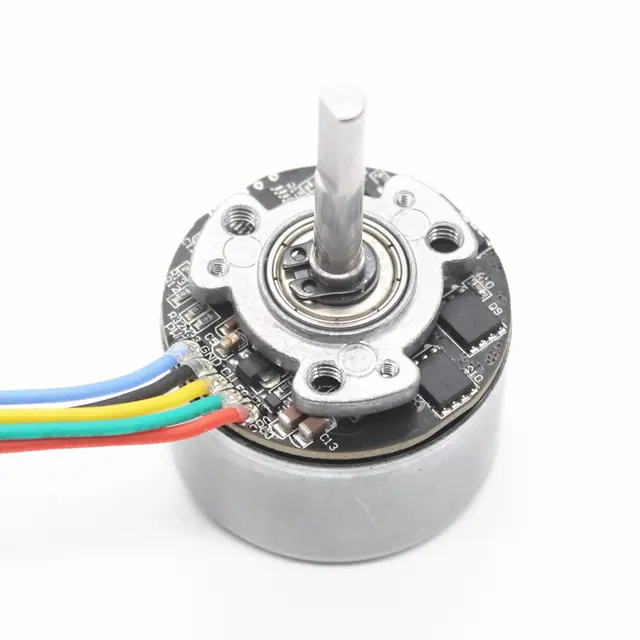
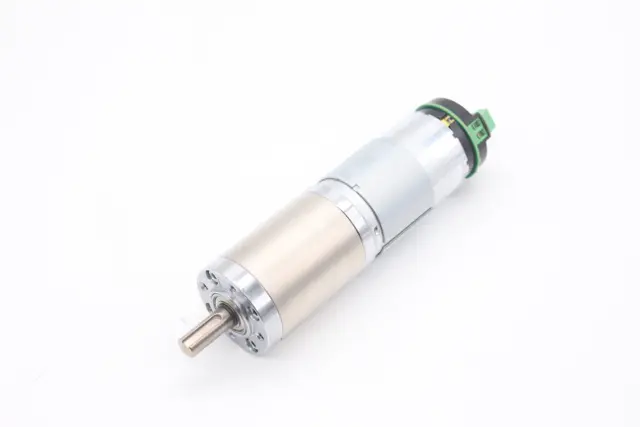
Motor series to compare for this kind of project.
Frequently Asked Questions
What changed for motor buyers?
The new Design World handbook brings several motion-control specification topics into one current issue, including motor sizing, drive current checks, encoder terminology, robot path control, and worm gearmotor behavior.
Does self-locking mean a worm gearmotor can replace a brake?
Not in every application. The source notes that worm gearing can lock only under certain conditions, while inertia may continue to move the axis after power is removed. Buyers should confirm stop and hold requirements separately.
What should engineers check when sizing a servo motor and drive?
They should review reflected inertia, acceleration and deceleration phases, peak current, continuous current, duty cycle, cable length, voltage drop, and electrical noise exposure near switching drives.
Which applications are most affected by this guidance?
Packaging machines, conveyors, robot cells, CNC-adjacent automation, indexing axes, lift or gate mechanisms, and any equipment where positioning, stopping behavior, or feedback accuracy affects performance.
Source
This article summarizes publicly available source information. Confirm technical details, pricing and compliance requirements with the original source before making purchasing decisions.
Source date: 2026-08-11