
Quick Takeaways
- Emerson launched the TESCOM RC-X motorized injection rate control valve on July 30, 2026 for offshore chemical injection applications.
- The product uses electric actuation and 4-20 mA control, which makes control-signal compatibility a practical specification point for automation teams.
- Emerson says the valve supports pressure up to 15,000 psi and ultra-low flow rates from 0.02 to 500 liters per hour.
- The company also describes the design as compact, lightweight and built with fewer moving parts than comparable products.
Industry Update
Emerson announced the TESCOM RC-X motorized injection rate control valve for offshore chemical dosing, positioning it for applications where refineries need accurate and repeatable chemical injection to maintain flow assurance. The company said the valve is intended to help manage risks such as hydration, corrosion, wax, asphaltene, scale and emulsion buildup in demanding offshore production environments.
The source release states that the RC-X uses a short-stroke design of less than 1/8 inch, electric actuation and 4-20 mA control. Emerson lists pressure capability up to 15,000 psi and flow rates from 0.02 to 500 liters per hour, with medium- and high-pressure models available.
For machine builders and process skid suppliers, the motor-related detail is the move away from pneumatic requirements in this type of control valve. Emerson says electric actuation can be useful where compressed air is unavailable or unreliable, while the smaller motor footprint can support smaller and lighter skid designs.
Buyer Considerations
Buyers evaluating motorized valves, compact actuators or dosing assemblies should treat this update as a specification checklist rather than a universal replacement signal. The important questions are whether the available control signal fits the plant control system, whether the pressure and flow range match the process window, and whether electric actuation reduces or increases site-level maintenance work.
For OEMs building chemical injection, process control or offshore support equipment, the claimed compact footprint may also affect enclosure layout, skid weight and service access. Those benefits should be checked against cable routing, environmental rating, hazardous-area requirements and spare-part availability.
Maintenance teams should also review the source's moving-parts and IP67 statements in the context of their own duty cycle, media compatibility and inspection routines. Electric actuation can reduce dependence on compressed air, but it still requires careful review of motor, feedback, sealing and control integration details before purchase.
Motor series to compare for this kind of project.
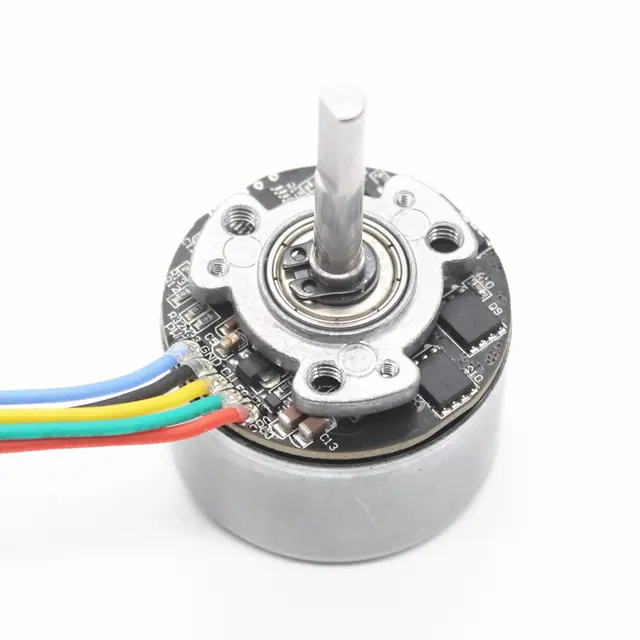 Brushless DC Motors
In internal rotor BLDC motors, the rotor with the permanent magnets rotates on a shaft inside a stationary stator with...
View series
Brushless DC Motors
In internal rotor BLDC motors, the rotor with the permanent magnets rotates on a shaft inside a stationary stator with...
View series
 DC Worm Gear Motors
Easty’Worm Gear Motors are designed to generate high torque in a small package size. Worm Gear Motors are great for...
View series
DC Worm Gear Motors
Easty’Worm Gear Motors are designed to generate high torque in a small package size. Worm Gear Motors are great for...
View series
Frequently Asked Questions
What changed in Emerson's July 2026 announcement?
Emerson launched the TESCOM RC-X motorized injection rate control valve for offshore chemical injection, with electric actuation, 4-20 mA control and published pressure and flow specifications.
Does this update matter to motor and automation buyers?
Yes. It highlights how electric actuation, compact motor footprint, control-signal compatibility and maintenance access can influence process equipment selection.
Which applications could be affected?
The source focuses on offshore chemical injection and process flow assurance, especially where dosing accuracy, pressure capability and reduced dependence on compressed air are important.
What should buyers verify before specifying a similar component?
Buyers should verify pressure range, flow range, control interface, environmental rating, hazardous-area requirements, service access, media compatibility and supplier support.
Source
This article summarizes publicly available source information. Confirm technical details, pricing and compliance requirements with the original source before making purchasing decisions.
Source date: 2026-08-02