

Quick Takeaways
- Drives&Controls published a September 7 article focused on humanoid robot safety, with particular attention to what happens when a component fails during real work.
- The article contrasts perception-led collision avoidance with functional safety questions about actuator, sensor, battery, and stability failure modes.
- Industrial robot buyers should compare humanoids with purpose-built options such as cobots and autonomous mobile robots where stable safe states may be easier to verify.
- The article points to ISO 10218-1 for industrial robot arms and notes that ISO/CD 25785-1 for dynamically stable mobile robots is still moving through committee review.
Industry Update
Drives&Controls has published an article by Dr David Brandt, vice-president of R&D and chief technology officer at Teradyne Robotics, asking how humanoid robots should respond when a component fails in a real industrial environment. The article was published on September 7, 2026, and frames the issue around safety, trust, and practical factory deployment rather than demonstrations alone.
The article notes that recent robotics safety work, including Nvidia's Halos for Robotics, puts heavy emphasis on perception, external sensing, and collision avoidance. Brandt argues that this is useful, but that functional safety also needs to ask what happens when the robot is no longer fully in control of itself.
For dynamically balancing humanoids, the article highlights a specific concern: a legged robot may fall if an actuator, sensor, battery, or balance-control function fails mid-task. It contrasts that risk with conventional industrial robots, cobots, and mobile platforms that can often move toward a simpler safe state because they are designed around a stable base or a more predictable motion envelope.
The article also references standards context. It says industrial robots are typically designed around single-fault tolerance principles under ISO 10218-1, while ISO/CD 25785-1, a standard for dynamically stable mobile robots, is still moving through committee review.
Buyer Considerations
For automation buyers, the immediate takeaway is not that humanoids are unusable. It is that robot selection should include a documented failure-response review before buyers compare payload, reach, software features, or vision capability. Actuator redundancy, brake behavior, battery fault handling, and controlled-stop strategy can be as important as perception performance.
Buyers comparing humanoids with cobots, AMRs, gantry systems, or other purpose-built automation should ask vendors to show stability data, single-fault assumptions, and the applicable safety standard path. This is especially important in workflows where workers share space with moving equipment, or where a falling machine could create a hazard even after collision detection has worked correctly.
For motor and drive sourcing teams, the discussion also points back to component-level requirements. Servo actuators, encoders, brakes, gearboxes, battery management, and drive diagnostics all contribute to a credible safety case. Procurement teams should avoid treating these parts as interchangeable commodities when the machine depends on coordinated motion to remain stable.
Motor series to compare for this kind of project.
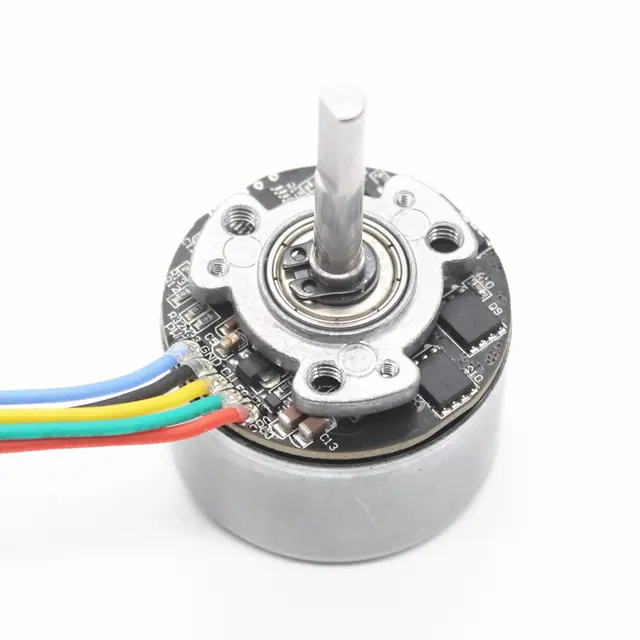 Brushless DC Motors
In internal rotor BLDC motors, the rotor with the permanent magnets rotates on a shaft inside a stationary stator with...
View series
Brushless DC Motors
In internal rotor BLDC motors, the rotor with the permanent magnets rotates on a shaft inside a stationary stator with...
View series
 DC Worm Gear Motors
Easty’Worm Gear Motors are designed to generate high torque in a small package size. Worm Gear Motors are great for...
View series
DC Worm Gear Motors
Easty’Worm Gear Motors are designed to generate high torque in a small package size. Worm Gear Motors are great for...
View series
Frequently Asked Questions
What changed for robot buyers?
The article adds a fresh safety lens to humanoid robot evaluation: buyers should ask how the system behaves after a component fault, not only whether it can see and avoid people during normal operation.
Does this affect motor and drive selection?
Yes. If a robot needs continuous motion control to stay stable, actuators, encoders, brakes, drives, and power systems become part of the safety discussion, not only performance specifications.
Are humanoid robots ruled out for factories?
No. The article says the safety case is unfinished and should be examined carefully. Buyers should compare humanoids with cobots, AMRs, and other purpose-built machines based on the task and the verified safe-state behavior.
What should buyers ask suppliers?
Ask for failure-mode analysis, stability data, single-fault assumptions, applicable safety standards, controlled-stop behavior, and how the robot handles actuator, sensor, and battery faults during a task.
Source
This article summarizes publicly available source information. Confirm technical details, pricing and compliance requirements with the original source before making purchasing decisions.
Source date: 2026-09-08