
Quick Takeaways
- Luffy AI announced 8.1 million euros in new funding for adaptive industrial control technology.
- The company says its control approach is being applied to motor-control use cases including pumps, fans and conveyors.
- The update is buyer-relevant for teams evaluating VFDs, drive tuning, commissioning effort and variable-load automation systems.
- Engineering teams should verify supported drive platforms, integration requirements and field validation before specifying any adaptive-control system.
Industry Update
Automation.com reported on July 7, 2026, that Luffy AI raised 8.1 million euros to support commercialization of its neuroplastic adaptive control technology. The article says the funding round was led by BGF, with participation from investors including M Ventures, Martlet Capital and Octopus Ventures.
The company describes its technology as a control system that can adapt in real time to changing machine behavior. In motor-control applications, that matters because pumps, fans, conveyors and variable-speed drive systems often operate across changing load, speed and environmental conditions.
The source article links the funding to industrial deployment rather than only research activity. It says Luffy AI is working with industrial partners on applications where conventional fixed control settings may require manual tuning or may not perform consistently as operating conditions change.
For buyers, the practical signal is not that every motor drive will immediately become self-tuning. It is that drive-control suppliers, automation integrators and equipment builders are continuing to invest in control software as a way to improve commissioning, responsiveness and operating consistency.
Buyer Considerations
Motor buyers and machine builders should treat this kind of adaptive-control update as an evaluation topic, especially when sourcing VFD-driven equipment for pumps, fans, conveyors or other loads that vary over time. A useful first question is whether the control layer works with the drive hardware, sensors, PLC environment and safety architecture already planned for the machine.
Teams should also separate control performance claims from motor and gearbox selection. Adaptive control may help a system respond to changing conditions, but it does not remove the need to size the motor, gearbox, brake, encoder and thermal margin correctly for the mechanical load.
When comparing suppliers, buyers should ask for field data from similar applications, commissioning requirements, fallback behavior, cybersecurity handling and service support. Those details determine whether an adaptive-control feature reduces engineering work or simply adds another integration dependency.
The update also reinforces a broader sourcing trend: motor-drive decisions are increasingly tied to software capability, not only rated power, enclosure, input voltage and communication protocol. Buyers should include controls expertise in supplier evaluations for high-value automation equipment.
Motor series to compare for this kind of project.
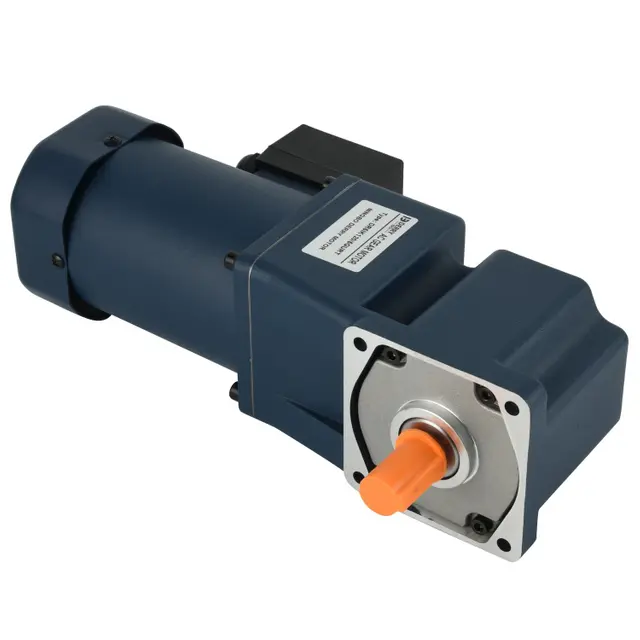 Universal AC Gear Motors
AC motors and gear motors include single-phase motors used with a single-phase AC power supply and three-phase motors...
View series
Universal AC Gear Motors
AC motors and gear motors include single-phase motors used with a single-phase AC power supply and three-phase motors...
View series
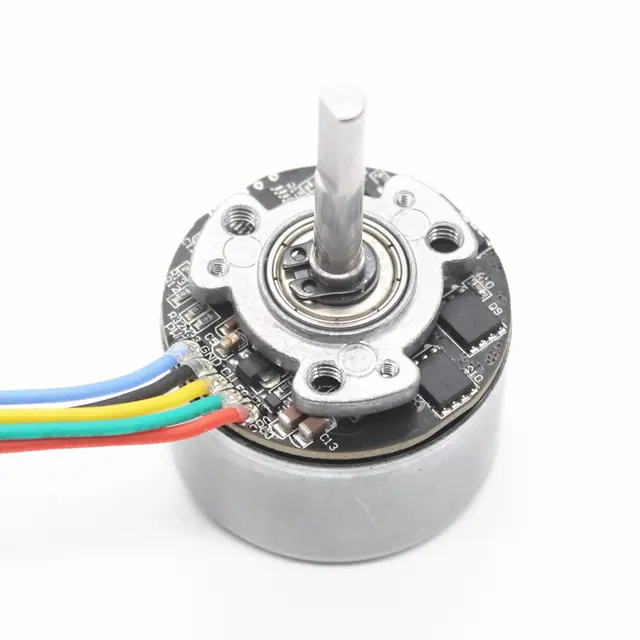 Brushless DC Motors
In internal rotor BLDC motors, the rotor with the permanent magnets rotates on a shaft inside a stationary stator with...
View series
Brushless DC Motors
In internal rotor BLDC motors, the rotor with the permanent magnets rotates on a shaft inside a stationary stator with...
View series
Frequently Asked Questions
Does this mean Luffy AI is selling a new motor or VFD?
The source article describes adaptive control technology and commercialization funding, not a new electric motor or standalone VFD product line.
Which motor applications are most relevant?
The article points to industrial motor-control use cases such as pumps, fans and conveyors, where load and operating conditions can change during normal operation.
What should buyers verify before using adaptive control with a motor drive?
Buyers should verify drive compatibility, required sensors, PLC integration, safety behavior, commissioning workflow, support model and proof from comparable field applications.
Does adaptive control replace correct motor sizing?
No. Buyers still need to size the motor, gearbox and drive for torque, speed, duty cycle, thermal limits and the mechanical load.
Source
This article summarizes publicly available source information. Confirm technical details, pricing and compliance requirements with the original source before making purchasing decisions.
Source date: 2026-07-13