

Quick Takeaways
- Mayr power transmission will show safety brakes for pitch and yaw drives at WindEnergy 2026 in Hamburg.
- Design World reported that servo motors are increasingly used in yaw drives, changing the brake requirements around controlled AC drive systems.
- DIN EN 81-44 adds environmental and safety requirements for elevators installed in wind turbines, including operation down to -25 deg C.
- Mayr says its brakes are specified down to -40 deg C and that its ROBA brake-checker can monitor brake switching without extra sensors.
Industry Update
Design World reported on September 2, 2026, that mayr power transmission will present wind-turbine safety brakes and monitoring systems at WindEnergy 2026 in Hamburg. The update covers application-optimized brakes for pitch and yaw drives, including the ROBA-stop M pitch brake, along with service-elevator safety solutions and brake monitoring.
The report notes that servo motors are increasingly being adopted in yaw drives, where they can replace uncontrolled drives in some applications. That shift changes the expectations placed on brake systems because the brake must work with controlled AC drive behavior, maintenance procedures and turbine environmental conditions.
The article also points to DIN EN 81-44, which defines safety requirements for permanently installed, power-driven elevators in wind turbines. According to the report, components must operate reliably under wind-turbine environmental conditions, including temperatures as low as -25 deg C. Mayr states that its brakes are specified down to -40 deg C and that related testing is supported by an in-house climate chamber.
For maintenance and monitoring, mayr's ROBA brake-checker monitors the movement of the brake armature disk without additional sensors and outputs the switching status. Design World reported that the system can help users investigate issues such as low supply voltage, incorrectly dimensioned supply lines, coil temperature rise and enlarged air gaps.
Buyer Considerations
For buyers of wind-turbine motion-control assemblies, this update is a reminder to evaluate the brake as part of the complete pitch or yaw drive package, not only as an accessory. Servo motor adoption can change inertia, stopping behavior, installation layout and maintenance exposure, so brake selection should be checked against the motor side, shaft arrangement and drive architecture.
Temperature rating is a practical sourcing checkpoint. Where DIN EN 81-44 or project specifications require reliable operation below -20 deg C, buyers should ask suppliers for documented operating-temperature ratings, test conditions and any limits that apply to service elevators, pitch drives, yaw drives or nacelle equipment.
Maintenance access also deserves attention. The report distinguishes designs that may be removed with the motor from safety brakes that remain on the system and hold the drive line when de-energized. Buyers should confirm what happens during motor removal, whether additional restraints are required and how the chosen brake layout affects service procedures.
Condition-monitoring data can support planned maintenance, but it should be reviewed as part of the controls architecture. Buyers should confirm available signal outputs, gateway options, remote-maintenance compatibility and how brake status data will be used by turbine control, service or digital-twin systems.
Motor series to compare for this kind of project.
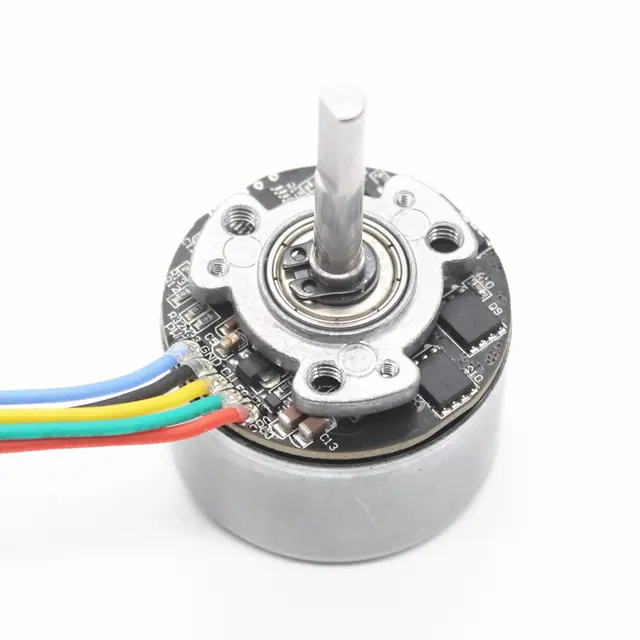 Brushless DC Motors
In internal rotor BLDC motors, the rotor with the permanent magnets rotates on a shaft inside a stationary stator with...
View series
Brushless DC Motors
In internal rotor BLDC motors, the rotor with the permanent magnets rotates on a shaft inside a stationary stator with...
View series
 DC Worm Gear Motors
Easty’Worm Gear Motors are designed to generate high torque in a small package size. Worm Gear Motors are great for...
View series
DC Worm Gear Motors
Easty’Worm Gear Motors are designed to generate high torque in a small package size. Worm Gear Motors are great for...
View series
Frequently Asked Questions
Does this update only matter for wind-turbine builders?
No. The article is specific to wind turbines, but the buyer checks also apply to other heavy motion-control systems where servo drives, safety brakes, cold environments and planned maintenance all interact.
What should buyers verify when sourcing brakes for servo yaw drives?
Buyers should confirm the brake's rated temperature range, mounting position, inertia impact, de-energized holding behavior, control signals, maintenance procedure and compatibility with the selected servo motor and drive.
Why is brake monitoring relevant to motor and gearbox buyers?
Monitoring can help maintenance teams see whether the brake is switching correctly and investigate electrical or wear-related conditions before they become service problems. It should be matched with the site's control and maintenance systems.
Source
This article summarizes publicly available source information. Confirm technical details, pricing and compliance requirements with the original source before making purchasing decisions.
Source date: 2026-09-05