

Quick Takeaways
- Microchip's September product roundup points readers to a PolarFire FPGA and SoC FPGA motor control solution.
- The related Microchip motor control page describes high-speed control loops and support for multi-motor control designs.
- Buyers comparing servo, BLDC or multi-axis drive platforms should check control-loop timing, safety requirements, software support and integration work.
Industry Update
Microchip Technology used its September 2026 product roundup to highlight several embedded and industrial technology updates, including a PolarFire FPGA and SoC FPGA motor control solution. The company also promoted a September 22 webinar focused on accelerating high-performance motor control with PolarFire FPGAs.
Microchip's related motor control page positions the PolarFire FPGA approach for applications that need fast control loops, deterministic processing and scalable control of multiple motors. The page describes the solution around FPGA-based control, real-time processing and motor-control development resources rather than a single finished drive product.
For industrial automation teams, the update is relevant because more motion systems are mixing conventional drives with programmable control platforms. FPGA-based motor control can be considered where machine builders need tight timing, coordinated axes, compact electronics or a path to customize motor-control logic.
Buyer Considerations
Motor buyers and drive engineers should treat this as an architecture option to evaluate, not a drop-in replacement for every servo drive or BLDC controller. The right comparison should include motor type, current and voltage range, encoder feedback, control-loop timing, safety certification needs and the team's ability to maintain FPGA-based designs.
For OEM machinery, packaging equipment, test systems and robotics, the practical question is whether the added control flexibility offsets development effort. Buyers should ask suppliers how motor tuning, field updates, diagnostics, thermal limits and long-term component availability will be handled.
The update may also affect sourcing conversations with drive vendors and control-board suppliers. If a project requires many coordinated motors or unusual motion profiles, it is worth checking whether FPGA-based control can reduce board count, improve timing margins or simplify future customization.
Motor series to compare for this kind of project.
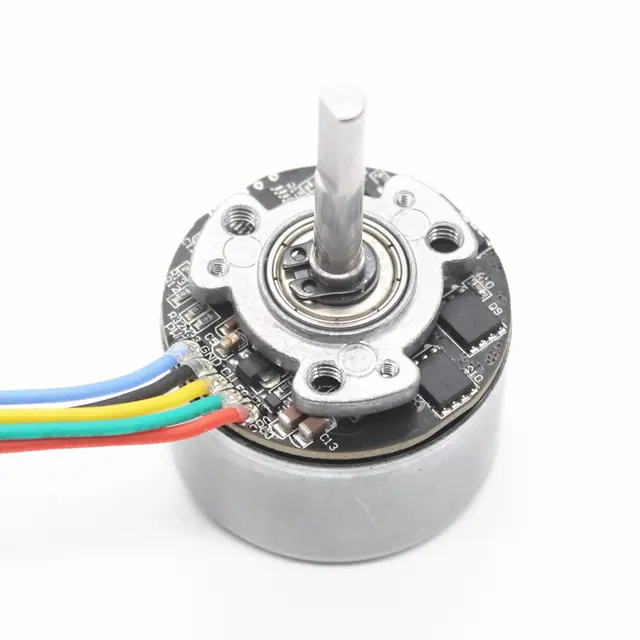 Brushless DC Motors
In internal rotor BLDC motors, the rotor with the permanent magnets rotates on a shaft inside a stationary stator with...
View series
Brushless DC Motors
In internal rotor BLDC motors, the rotor with the permanent magnets rotates on a shaft inside a stationary stator with...
View series
 DC Worm Gear Motors
Easty’Worm Gear Motors are designed to generate high torque in a small package size. Worm Gear Motors are great for...
View series
DC Worm Gear Motors
Easty’Worm Gear Motors are designed to generate high torque in a small package size. Worm Gear Motors are great for...
View series
Frequently Asked Questions
Does this mean Microchip is selling a complete motor drive?
The public material describes a PolarFire FPGA and SoC FPGA motor control solution and development resources. Buyers should confirm the exact hardware, software and integration scope directly with Microchip or a qualified supplier.
Which motor applications could be a fit?
Potential fit areas include BLDC, servo and multi-axis motion systems where deterministic timing, custom control logic or compact electronics are important. Final suitability depends on motor ratings, feedback devices and safety requirements.
What should buyers verify before selecting an FPGA motor control path?
Buyers should verify supported motor types, control-loop performance, feedback interfaces, thermal design, safety needs, software tools, tuning workflow and supplier support before committing to a production design.
Source
This article summarizes publicly available source information. Confirm technical details, pricing and compliance requirements with the original source before making purchasing decisions.
Source date: 2026-09-23