

Quick Takeaways
- Drives & Controls published a technical update on 4 August 2026 explaining how a three-phase pump motor can be used as a process sensor.
- The article says line-current monitoring can be weak at light loads because magnetising current remains significant while shaft load falls.
- Active-power monitoring is presented as a more direct load signal for dry running, dead-heading, impeller wear, blockage and cavitation.
- The approach can be installed from the motor supply side, which may reduce the need for wet-side instrumentation in pump systems.
Industry Update
Drives & Controls reports that current monitoring remains a common method for protecting three-phase pump motors, but it can lose sensitivity when the pump is lightly loaded. The article explains that an induction motor draws both active current, which is tied to mechanical load, and reactive current, which is tied to magnetising inductance and applied voltage.
According to the article, total line current can fall only modestly even when shaft load drops sharply. That makes a dry-running pump look similar to a pump operating at a light duty point when only current is being watched.
The source describes active power as a more useful signal because it accounts for the reactive component and tracks shaft load across the operating range. A load monitor can therefore use measurements from the motor supply cables to identify conditions such as dry running, dead-heading, progressive blockage, impeller wear and cavitation.
For remote or unmanned pump stations, the article says an underpower trip can shut down a dry-running motor before mechanical seal damage occurs, while slower active-power trends can point to hydraulic degradation before failure.
Buyer Considerations
Pump, wastewater, irrigation and process-equipment buyers should treat the update as a reminder to compare protection methods, not only motor nameplate ratings. A three-phase motor that is correctly sized may still need load monitoring if the application can run dry, operate against a closed valve or degrade gradually through impeller wear.
When evaluating motor control centres, soft starters, variable-speed drives or separate protection relays, buyers should ask whether active-power or true-power monitoring is available, how thresholds are set and whether the system can distinguish low-flow operation from dry running.
The article also highlights a maintenance trade-off. If useful condition data can be captured from motor supply cables, some sites may reduce dependence on sensors installed in the pump or pipework. Buyers should still verify compatibility with their motor type, supply arrangement, drive configuration and required shutdown logic.
Motor series to compare for this kind of project.
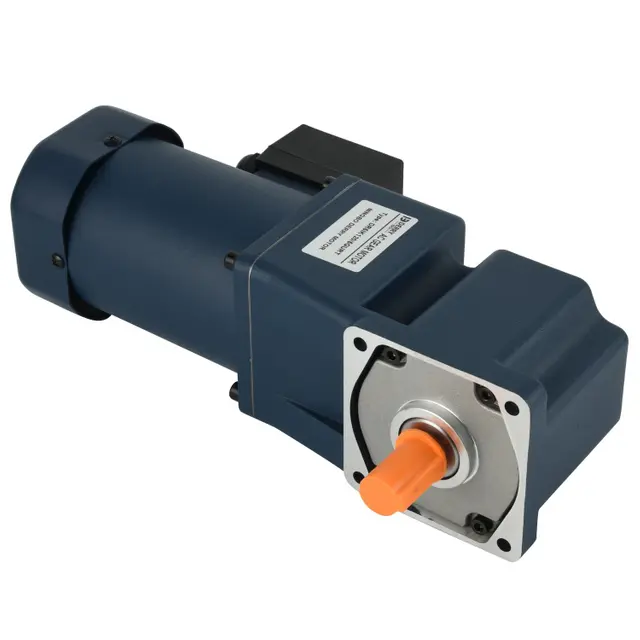 Universal AC Gear Motors
AC motors and gear motors include single-phase motors used with a single-phase AC power supply and three-phase motors...
View series
Universal AC Gear Motors
AC motors and gear motors include single-phase motors used with a single-phase AC power supply and three-phase motors...
View series
 DC Worm Gear Motors
Easty’Worm Gear Motors are designed to generate high torque in a small package size. Worm Gear Motors are great for...
View series
DC Worm Gear Motors
Easty’Worm Gear Motors are designed to generate high torque in a small package size. Worm Gear Motors are great for...
View series
Frequently Asked Questions
Does active-power monitoring replace all pump sensors?
Not necessarily. The source article explains how motor-side active-power monitoring can detect several pump fault signatures, but buyers should confirm whether their process also needs pressure, flow, vibration or temperature measurements.
Which pump faults are discussed in the article?
The article discusses dry running, dead-heading, impeller wear, progressive blockage and cavitation as conditions that can create recognizable active-power signatures.
Why can line-current monitoring miss dry running?
The article says magnetising current can remain substantial at light load, so total line current may not fall enough to clearly separate dry running from normal low-load operation.
What should buyers verify before specifying this approach?
Buyers should confirm the monitor or drive measures active power, supports practical threshold setting and fits the motor control centre, fixed-speed or variable-speed architecture, and site shutdown requirements.
Source
This article summarizes publicly available source information. Confirm technical details, pricing and compliance requirements with the original source before making purchasing decisions.
Source date: 2026-08-05