
Quick Takeaways
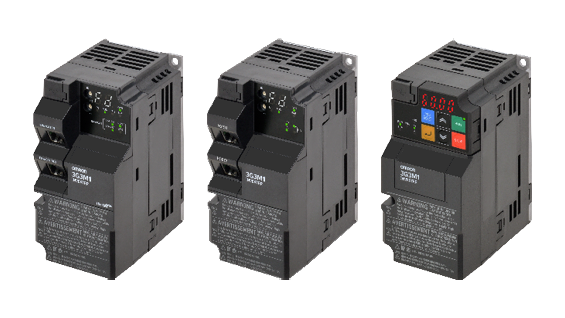
- Omron Automation's M1 Inverter family targets AC motor control applications that need scalable drive, network, and safety options.
- Control.com reports that the portfolio includes EtherCAT, RS-485, and Ethernet variants, with Ethernet support for PROFINET, EtherNet/IP, and Modbus TCP.
- The update is relevant for OEMs and sourcing teams comparing VFD platforms across packaging, material handling, pumping, HVAC, compressor, and other motor-driven machines.
- Buyers should verify supported motor types, encoder input needs, power range, safety design, network compatibility, and commissioning workflow before specifying the drive.
Industry Update
Control.com reported on September 19, 2026, that Omron Automation's M1 Inverter family is positioned as a flexible VFD platform for modular AC motor control. The article describes a drive family aimed at OEMs that need repeatable control of motor speed, torque, and position across different machine projects.
The M1 portfolio is described as offering communication variants for built-in EtherCAT, standard RS-485, and built-in Ethernet. The Ethernet version is reported to support PROFINET, EtherNet/IP, and Modbus TCP, giving machine builders more room to align drive selection with the control network already used in a plant or equipment platform.
Control.com also notes integrated safety through STO signals or communication-based safety, plus an encoder port for position feedback. Those details make the update more than a simple product-line announcement because they affect how designers choose contactors, safety wiring, panel space, and maintenance procedures.
Buyer Considerations
For AC motor buyers, the practical question is whether one inverter family can cover several machine variants without increasing setup and spare-parts complexity. A common drive platform may simplify training and service, but only if the selected model supports the motor type, power rating, feedback method, braking approach, and communication protocol required by the application.
OEM engineers should compare the stated safety functions with the whole-machine safety design, not just the drive rating. Safe Torque Off can reduce wiring and external components in some designs, but the final safety performance also depends on upstream sensors, safety controllers, commissioning checks, and documentation.
Sourcing teams should also review lifecycle items before changing a VFD standard: software tools, parameter backup, local availability, approved accessories, replacement lead time, and support for the plant's preferred industrial network. These checks are especially important for machines shipped to multiple regions or maintained by different service teams.
Motor series to compare for this kind of project.
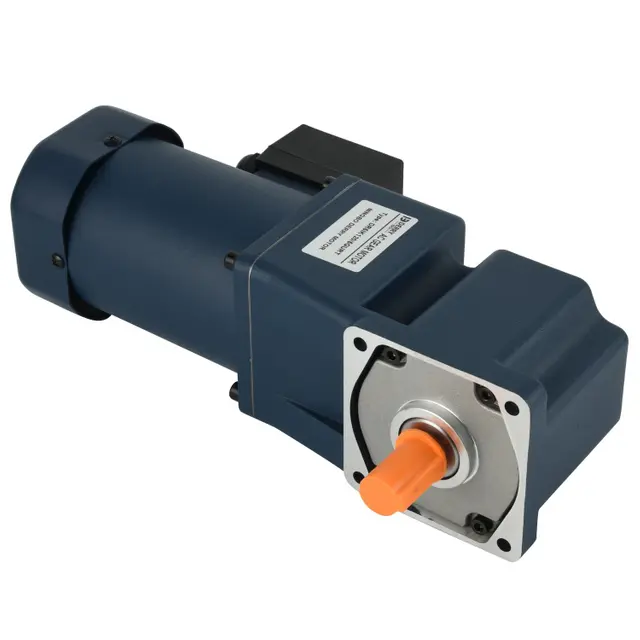 Universal AC Gear Motors
AC motors and gear motors include single-phase motors used with a single-phase AC power supply and three-phase motors...
View series
Universal AC Gear Motors
AC motors and gear motors include single-phase motors used with a single-phase AC power supply and three-phase motors...
View series
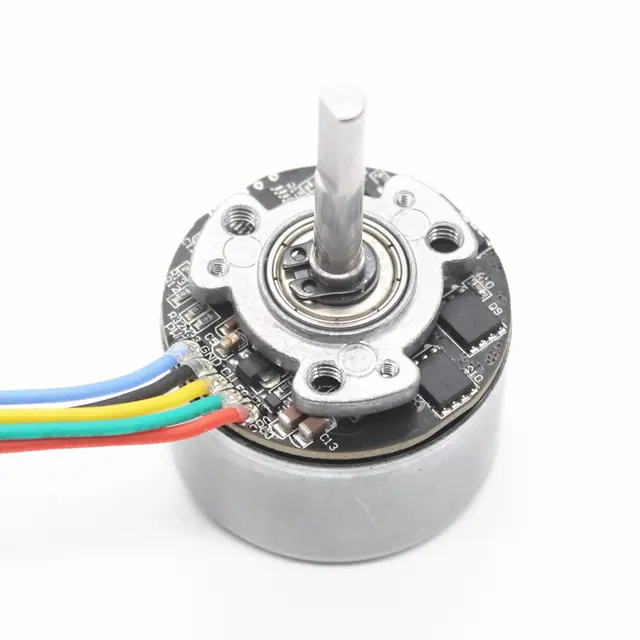 Brushless DC Motors
In internal rotor BLDC motors, the rotor with the permanent magnets rotates on a shaft inside a stationary stator with...
View series
Brushless DC Motors
In internal rotor BLDC motors, the rotor with the permanent magnets rotates on a shaft inside a stationary stator with...
View series
Frequently Asked Questions
What changed with the Omron M1 Inverter family?
Control.com reports that Omron's M1 family combines AC motor control, multiple industrial-network options, integrated safety, and encoder feedback support in a scalable VFD platform.
Does this affect buyers of AC motors and gear motor systems?
Yes. A VFD choice can affect motor compatibility, speed control, torque behavior, wiring, safety design, commissioning time, and the spare parts kept for motor-driven machines.
Which applications should pay attention to this update?
The source article points to OEM and industrial uses such as material handling, packaging, pumping, HVAC, compressors, and other systems where AC motors need controlled speed, torque, or positioning.
What should engineers verify before specifying the drive?
Engineers should confirm the exact motor type, power range, feedback requirement, network protocol, safety architecture, enclosure needs, accessories, and support path for the intended machine.
Source
This article summarizes publicly available source information. Confirm technical details, pricing and compliance requirements with the original source before making purchasing decisions.
Source date: 2026-09-26