

Quick Takeaways
- Renesas announced the official opening of its Physical AI and Robotics Lab in Beijing on August 27, 2026.
- The company says the lab will support system-level demonstration, validation and joint development for robotic systems.
- The update highlights the need to evaluate motion control, sensing, actuation and power management as connected design choices.
- Buyers working on robotics and automation projects should confirm controller, drive, sensor and motor interface requirements early.
Industry Update
Renesas Electronics announced the official opening of its Physical AI and Robotics Lab in Beijing, China. The company describes the facility as a dedicated site for customers to demonstrate, validate and jointly develop next-generation robotic systems, from proof-of-concept work through deployment at scale.
The announcement positions robotics as a key example of physical AI because these systems must sense, decide and act in the physical world with real-time behavior. Renesas says such systems require integration across embedded processing, sensing, actuation, power management, software and development tools.
For engineering teams, the practical detail is the lab's system-level focus. Renesas says the facility will combine hardware, software, AI modeling, control, power supply, sensing and verification work to support complete robotics solution development rather than only showing individual components.
Renesas also links the lab to its broader portfolio for robotics, including brain and motion control, sensing, actuation and power management. That makes the announcement relevant beyond humanoid robots, especially for teams building automated equipment that depends on coordinated motors, drives, controllers and sensors.
Buyer Considerations
Motor buyers and automation builders should treat this update as another sign that robotic motion projects are becoming more system-dependent. Motor selection still depends on torque, speed, duty cycle, thermal limits and gearbox matching, but the surrounding controller, sensor and power architecture can now shape whether a design is easy to validate.
For robot joints, mobile platforms, handling systems and other automated equipment, sourcing teams should ask suppliers how motors, drives, encoders, brakes, power stages and embedded controllers will be tested together. A component that looks suitable on a data sheet may still need interface, software and thermal checks inside the full machine.
The announcement does not change motor specifications by itself. It does, however, reinforce a useful buying discipline: verify control-loop requirements, communication interfaces, supply voltage, safety needs and validation support before committing to a motor or gear motor package for a robotics program.
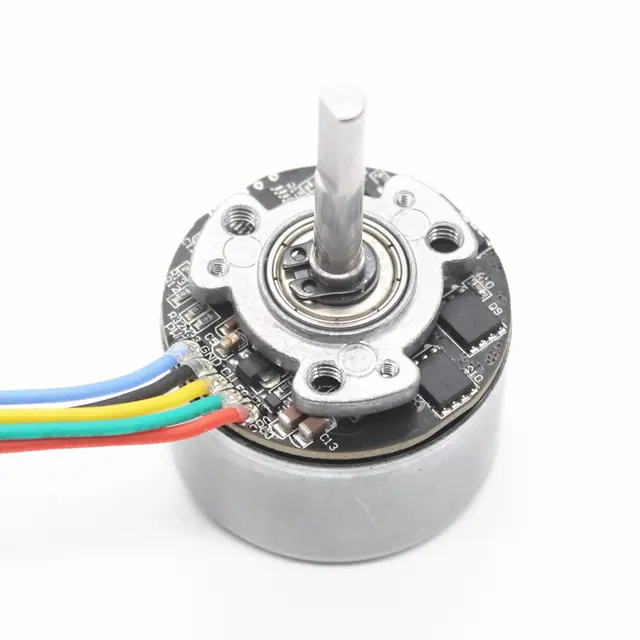
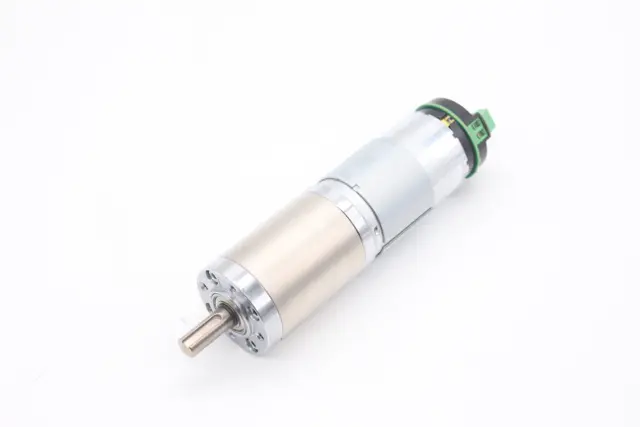
Motor series to compare for this kind of project.
Frequently Asked Questions
What did Renesas announce?
Renesas announced the official opening of a Physical AI and Robotics Lab in Beijing to support system-level demonstration, validation and joint development for robotic systems.
Does this announcement introduce a new motor?
The source announcement is about a robotics development lab, not a new motor model. Its buyer relevance is the connection between motion control, actuation, sensing and power management in robotics design.
Why should motor buyers pay attention?
Robotics projects often require motors, drives, encoders, controllers and power electronics to work together. The lab announcement highlights the growing importance of validating those pieces as a complete system.
What should buyers verify before selecting motors for robotics?
Buyers should confirm torque and speed requirements, gearbox ratio, feedback device compatibility, drive interface, supply voltage, duty cycle, thermal behavior and available validation support from suppliers.
Source
This article summarizes publicly available source information. Confirm technical details, pricing and compliance requirements with the original source before making purchasing decisions.
Source date: 2026-08-28