

Quick Takeaways
- Universal Robots has announced its seventh-generation collaborative robot platform, including three new g-Series robot arms.
- The new arms are named by payload and reach: UR10g-1750, UR17g-1300, and UR18g-950.
- The platform adds an AI-ready tool flange, built-in force-torque sensing, impedance control, and Real-Time Data Exchange features.
- UR says the CB7 Core controller offers more computing power in a smaller footprint and supports modern industrial communications.
- The platform includes safety and cybersecurity claims tied to ISO 10218-1, UL 1740, ISO 13849-1, and IEC 62443-4-1 references.
Industry Update
Universal Robots has announced its Gen 7 collaborative robot platform for industrial automation, according to a September 17 report from Drives & Controls. The update covers new g-Series cobot arms, a redesigned controller, updated PolyScope X software, a new teach pendant, and a tool-flange interface for programming and sensor connection at the working end of the robot.
The three new arms listed in the report are UR10g-1750, UR17g-1300, and UR18g-950, with the names reflecting payload in kilograms and reach in millimeters. The platform is described as joining UR's existing e-Series and UR cobot lines rather than replacing all current options at once.
A major hardware change is the AI-ready tool flange, which is intended to provide data, power, and safety connections directly at the flange. The report also cites built-in force-torque sensing, impedance control, and RTDE, which can matter in force-sensitive assembly, manipulation, and machine-tending applications where end-of-arm tooling and feedback quality shape the usable motion envelope.
The CB7 Core controller is described as offering 40% more computing power in a 30% smaller footprint than previous generations. UR also presented the Gen 7 platform with partners including Cognex, Schunk, Magswitch, Smooth Robotics, Psyonic, Robotiq, and Inbolt, pointing to an ecosystem approach around machine vision, gripping, and application software.
Buyer Considerations
For automation buyers, the update is less about a single robot arm specification and more about the complete motion cell. When a tool flange carries more sensing, data, power, and safety functions, buyers should verify connector formats, cable routing, sensor bandwidth, end-of-arm tooling loads, and how the robot controller will communicate with PLCs, HMIs, vision systems, and plant networks.
The controller and software claims also make integration planning important. A smaller controller can help cabinet layouts, but buyers still need to confirm thermal conditions, cabinet mounting, fieldbus requirements, safety I/O, spare-part strategy, and whether existing application code or external equipment will work with the selected cobot model.
Safety and cybersecurity references should be checked against the exact robot, controller, software version, and application. Collaborative robot certification does not automatically validate a finished workcell, so risk assessment, guarding, speed and separation settings, gripper behavior, and emergency-stop architecture remain project-level responsibilities.
For sourcing teams comparing collaborative robots, the practical questions are clear: which payload and reach class fits the tooling, whether integrated sensing reduces external hardware, how support will be handled across third-party partners, and what documentation is available before purchase approval.
Motor series to compare for this kind of project.
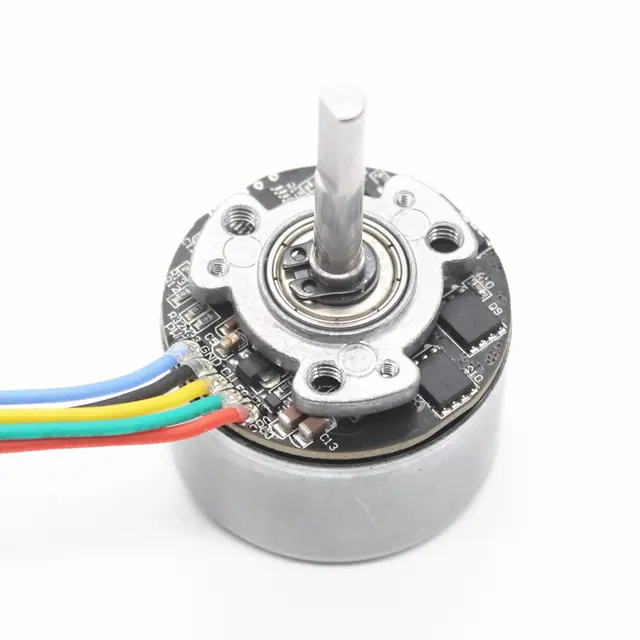 Brushless DC Motors
In internal rotor BLDC motors, the rotor with the permanent magnets rotates on a shaft inside a stationary stator with...
View series
Brushless DC Motors
In internal rotor BLDC motors, the rotor with the permanent magnets rotates on a shaft inside a stationary stator with...
View series
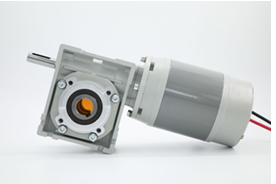 DC Worm Gear Motors
Easty’Worm Gear Motors are designed to generate high torque in a small package size. Worm Gear Motors are great for...
View series
DC Worm Gear Motors
Easty’Worm Gear Motors are designed to generate high torque in a small package size. Worm Gear Motors are great for...
View series
Frequently Asked Questions
What did Universal Robots announce?
Universal Robots announced its Gen 7 collaborative robot platform, including new g-Series robot arms, a redesigned controller, updated software, and tool-flange features for sensing and integration.
Does this change how buyers should specify cobot cells?
It can. Buyers should review flange connections, controller communications, safety functions, end-of-arm tooling, sensor integration, and compatibility with existing plant systems before choosing a model.
Which applications could be affected?
The update is most relevant to collaborative robot cells for machine tending, inspection, material handling, force-sensitive assembly, high-mix production, and applications that combine motion with machine vision or smart grippers.
What should buyers verify before ordering?
Buyers should confirm payload, reach, duty cycle, environmental limits, controller mounting, communication protocols, safety documentation, support for third-party tools, and the availability of application-specific integration support.
Source
This article summarizes publicly available source information. Confirm technical details, pricing and compliance requirements with the original source before making purchasing decisions.
Source date: 2026-09-18